
A WARM WELCOME
You do not need a cupboard full of unfamiliar ingredients to begin. Start with one dish, learn a few flavors, and make a meal that fits your day.
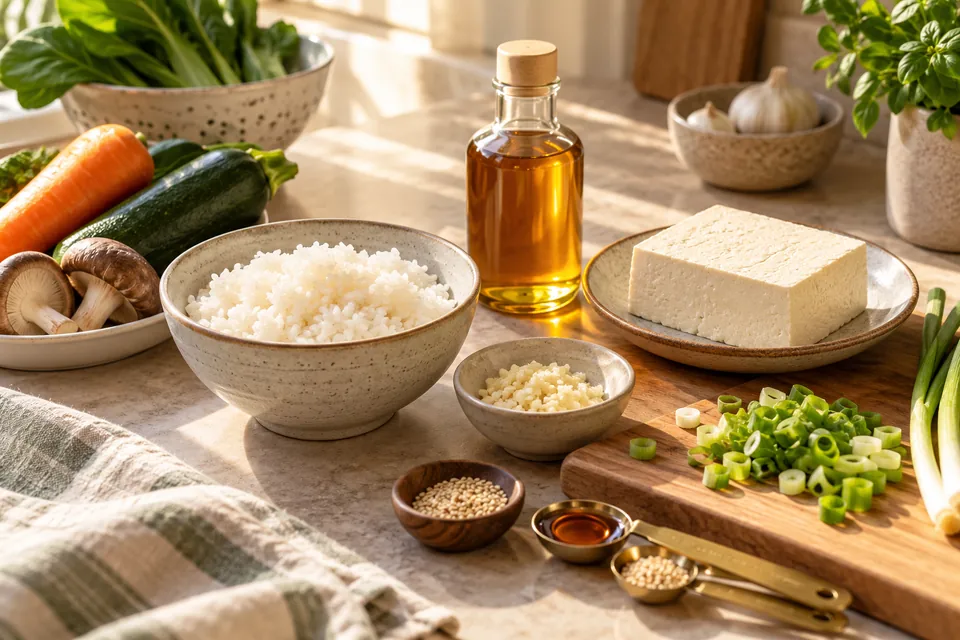
Choose one starting point
A rice dish, a simple soup, or a vegetable side is a good place to get comfortable. Read the whole recipe before shopping, including its ingredient notes and preparation time.
Browse the recipe index →Meet the ingredients
Learn what gochujang, doenjang, and toasted sesame oil bring to a dish. Buy what your first recipe needs; the rest of your pantry can grow with you.
Get to know the pantry →Bring the meal together
One main dish and rice can be enough. Add a vegetable side when you want a little more color and contrast. Your everyday table does not need to be elaborate.
Build your first babsang →Before you turn on the stove
A little preparation makes your first Korean meal easier. Choose one dish to learn, then keep the rest of the table simple.
- Read the whole recipe. Check whether it starts with cooked rice, thawed ingredients, soaked noodles, or a prepared broth. Those steps may need to happen first.
- Check the clock. Preparation, cooking, and waiting are different tasks. Allow for marinating or soaking as well as time at the stove.
- Match the ingredients. Check the type of rice, sauce, or chili product before you buy it. Our Korean pantry guide explains useful label terms.
- Set out your equipment. Check the pan size, prepare a cutting board, and make space for ingredients that have already been measured.
- Read the finish cues. Look for the color, texture, and liquid level described in the recipe. Use the stated time together with those cues.
Measure with confidence
When both are listed, use the recipe’s gram (g) or milliliter (ml) amount as the reference. Grams measure weight; milliliters measure volume.
- US spoon measures: 1 tablespoon is approximately 15 ml and 1 teaspoon is approximately 5 ml. Use measuring spoons, with a level measure unless the recipe says otherwise.
- Cups vary: a US customary cup is approximately 237 ml; a metric cup is 250 ml. Use the cup size stated in the recipe. A rice-cooker cup may be a different size.
- Weight is ingredient-specific: a cup of flour and a cup of soy sauce do not weigh the same. A volume-to-weight conversion needs information about that ingredient.
- Read the ingredient state: “cooked rice” and “uncooked rice” are different measurements. Also check whether an ingredient is drained, peeled, chopped, or packed before measuring.
- Changing the serving size: more food may need a larger pan or separate batches. Cooking time and seasoning do not always increase in the same proportion.
Make it comfortable for you
Korean cooking includes mild as well as spicy dishes. If you are new to an ingredient, read its flavor notes before replacing it. Leaving out a chili paste can change sweetness, saltiness, and thickness as well as heat.
Read the labels on sauces, broths, kimchi, and seasonings. A vegetable dish may still contain seafood ingredients, and soy-based products may contain wheat.