
One dish becomes a meal
Babsang (밥상) is a meal table. There is no need to make a dozen dishes: a bowl of rice, something satisfying, and a little contrast can make an everyday meal feel complete.
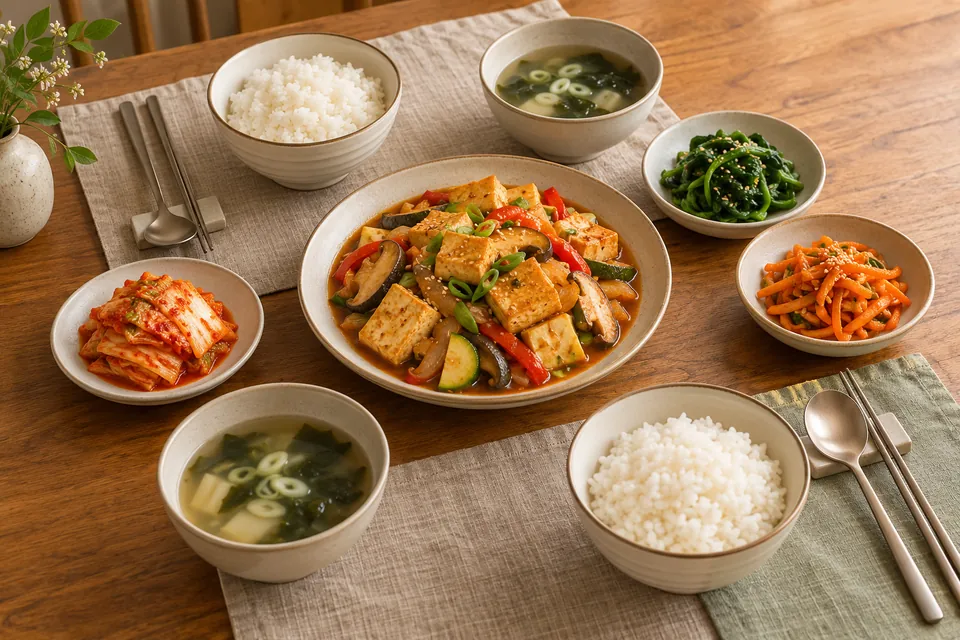
Choose your anchor
Begin with the dish you most want to eat. It might be a soup, a stew, grilled food, or a bowl of noodles. Let that choice guide the rest of the meal.
Add balance
Pair a richly seasoned main with something mild. Add a crisp vegetable dish beside a soft stew, or a refreshing side beside a warm bowl.
Keep it manageable
One main and one side is a sensible place to begin. Read both recipes before starting so you know what can be prepared first.
Four ways to think about dinner
Rice + stew + a crisp side
Let a warm stew take the lead. Serve rice alongside it and choose a vegetable side with a different texture.
Rice + a main + vegetables
Choose one cooked main and a vegetable dish. Keep their seasonings complementary so every dish does not compete for attention.
A rice or noodle bowl
A complete bowl can stand on its own. A small side is optional, especially when the bowl already includes several ingredients.
A centerpiece + small dishes
For company, choose a centerpiece you feel comfortable cooking. Add familiar sides, and plan the order of preparation before guests arrive.
Vegetables, grains & a protein you enjoy
Bring variety to your table with different vegetables, a grain, and a protein such as tofu, beans, eggs, fish, or meat. Choose portions and combinations that suit your needs. Whole grains are an optional way to add variety. Choose the grains and noodles you enjoy with the meal you are making.
Source: WHO guidance on variety, balance, and moderation.
A practical order of work
This is a planning example, not a timed or kitchen-tested menu. Use the preparation and cooking instructions in your chosen recipes to set the actual order.
- Find the longest lead-in task. Check for thawing, soaking, marinating, broth preparation, or rice cooking before you decide when to begin.
- Combine your shopping notes. Group the ingredients for the whole meal. Add quantities only when the units and ingredient state match; keep cooked and uncooked amounts separate.
- Prepare shared ingredients. Wash and cut the vegetables needed across your recipes, then separate the measured amounts for each dish.
- Check your stove space. Avoid planning several dishes that all need the same pan or burner at the final moment.
- Schedule the final texture. Plan dishes that need last-minute attention around the recipes’ serving instructions. Follow each recipe’s handling guidance for anything prepared ahead.
Choose recipes with confirmed quantities and instructions. Check every component when cooking for an allergy or dietary preference.