
The ingredients behind the flavor
Build your Korean pantry one recipe at a time. Start with a few useful staples, then add the ingredients that suit the dishes you enjoy.
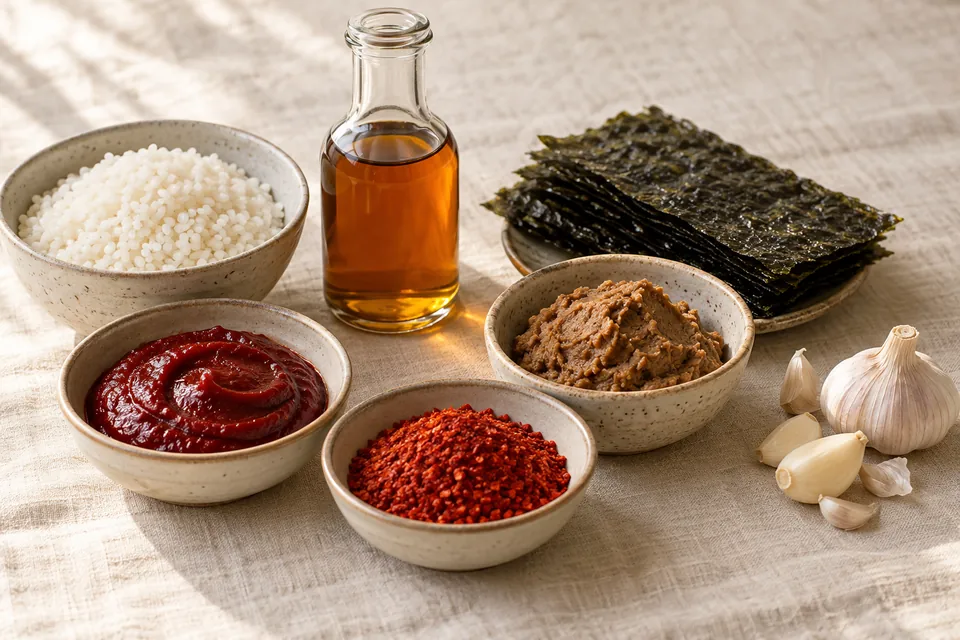
Gochujang
A thick, savory chili paste with sweetness and heat. It brings body to sauces and marinades. Heat and sweetness vary by brand. Gochugaru is dried chili flakes or powder; it is not an equal spoon-for-spoon replacement for this paste.
Shopping note: Choose plain gochujang when a recipe calls for the paste; a ready-made bibimbap sauce is already seasoned. Sriracha is thinner and is not a direct replacement.
Doenjang
A deeply savory soybean paste, often used in soups, stews, and dipping sauces. Its texture and saltiness vary.
Shopping note: Miso has a different flavor and can be sweeter or milder. If a recipe allows it as a substitute, adjust seasoning according to that recipe.
Gochugaru
Red chili flakes or powder that add color, heat, and chili flavor. Coarse and fine grinds behave differently in a dish.
Shopping note: Look for the grind the recipe requests. Cayenne and mixed crushed red pepper differ in heat and texture.
Ganjang
Soy sauce provides salt and savory depth. Korean soup soy sauce, guk-ganjang, is distinct from the soy sauces commonly used for dipping and everyday seasoning.
Shopping note: Check which kind the recipe specifies. Changing the type can affect both saltiness and color.
Chamgireum
Nutty, aromatic toasted sesame oil is often added in small amounts for flavor. It differs from pale, untoasted sesame oil.
Shopping note: Look for toasted sesame oil when that is what the recipe names. Follow the bottle’s storage instructions.
Ssal
Short- or medium-grain white rice is a familiar companion to many Korean meals. Its texture differs from long-grain varieties such as basmati.
Shopping note: Use the rice type and water method specified in your recipe or rice cooker instructions. Sweet or glutinous rice (chapssal, 찹쌀) is a distinct ingredient. Check whether the recipe measures uncooked rice or cooked rice.
Gim
Gim comes in sheets for rolling and in smaller seasoned sheets for eating with rice. Both have a place at the table.
Shopping note: For gimbap, look for full-size sheets intended for rolling; small seasoned snack sheets are not equivalent.
Garlic & scallions
Garlic and scallions appear in many seasonings, soups, and vegetable sides. In U.S. shops, scallions may also be labeled green onions.
Shopping note: Korean daepa is a larger green onion. Follow the recipe’s weight or volume instead of assuming one stalk is the same size.
Ingredients and allergens differ by brand. Check sauces, pastes, broth powders, and seasoned seaweed before cooking for a dietary requirement. Packaging directions are also the starting point for storage after opening.
Compare sodium before you choose
Compare sodium on sauce labels using the same serving size, then consider how much you will actually use. Soy sauce and other salty seasonings can add up across a meal. A reduced-sodium label means less than the regular product; it does not always mean low sodium.
Source: FDA guidance on sodium labels and condiments.
Before using a substitute
- Check the job it does. An ingredient may add salt, sweetness, heat, thickness, or texture. A substitute can change more than one of these.
- Follow recipe-specific guidance. Use a substitute marked as tested when available. A suggested option without a testing note should not be assumed to give the same result.
- Read every ingredient label. Sauces, broths, kimchi, noodles, and toppings can contain ingredients that are not obvious from the dish name. Check each product if you avoid particular ingredients or allergens.
A vegetable-based dish is not automatically vegetarian, vegan, or gluten-free. Check the full recipe and the products you plan to use.
Where to begin
Choose your first dish before you shop. Buy a small quantity of unfamiliar ingredients when possible, and keep the original label so you can refer to ingredients and handling directions.