
순두부찌개 · Sundubu jjigae brings delicate tofu and a warming broth to the table. The contrast matters: keep the tofu in generous pieces while the vegetables soften around it. Serve with plain rice so each spoonful can be balanced to your preferred heat.
Jump to recipe · See six cooking steps
Before you begin
Choose Korean sundubu or very soft silken tofu. Firm tofu can be used as an untested variation, but it will give a different texture. Gochugaru is Korean chili flakes; a mixed chili seasoning containing cumin or salt will change the flavor. Use measured tablespoons: 1 tablespoon is 15 ml.
This is an editorial adaptation researched from 케이쿡’s recipe. The reference does not specify tofu weight or stock volume. Here, 350 g tofu and 350 ml unsalted stock are suggested starting quantities, not measurements verified from the original or by a My Babsang kitchen test. Yield is approximately two modest portions with rice. Allow about 10 minutes to prepare and 15 minutes to cook; timing and yield are estimates.
Use prepared anchovy stock. If using a stock packet, follow its label and measure the finished liquid. Salted stock will require less final seasoning. A small heavy saucepan of at least 1.2 L capacity works; use an earthenware pot only if its manufacturer approves direct stove heat.
Flavor, substitutions and allergens
This version has no meat or clams, but anchovy stock and oyster sauce mean it is not vegetarian. It contains fish, shellfish, soy, sesame and egg. Soy and oyster sauces may contain wheat; check every label. Mushroom stock with a vegetarian mushroom sauce is a possible untested adaptation, not an equivalent result.
The ingredient list keeps vegetables as fractions of whole pieces because their sizes vary. Use thin zucchini slices so they soften without prolonged boiling. Green chili is optional. Start with 1 tablespoon gochugaru if you prefer less heat. Salt is added after tasting rather than using the reference’s fixed amount, since sauce and stock salinity vary.
Step-by-step cooking photos
1. Prepare the ingredients
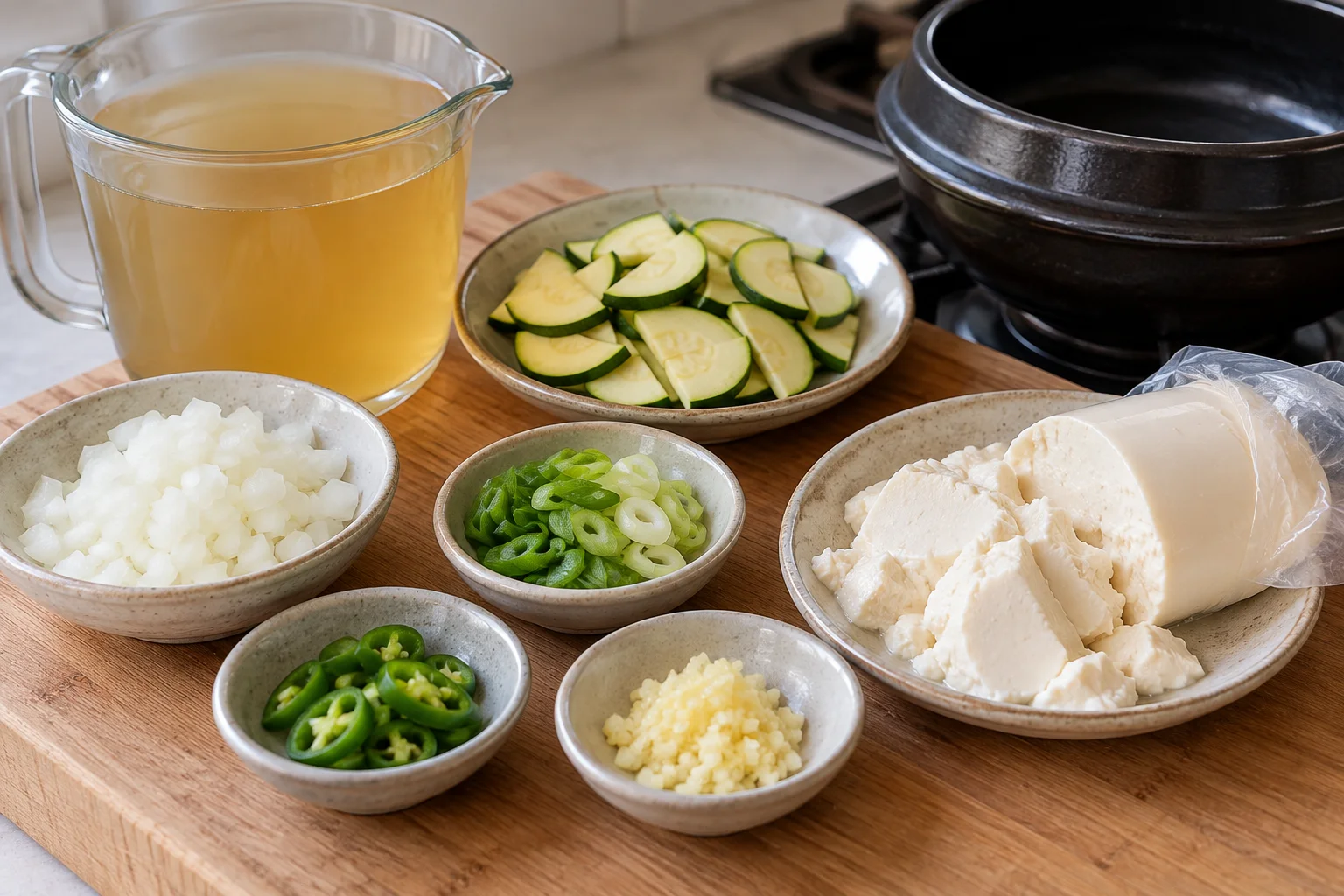
Prepare 350 g soft tofu and 350 ml unsalted anchovy stock; these are editorial starting quantities because the reference omits them. Finely dice the onion and white scallion. Slice the zucchini into thin half-moons and the chili into rings. Reserve green scallion for the finish.
2. Soften the aromatics
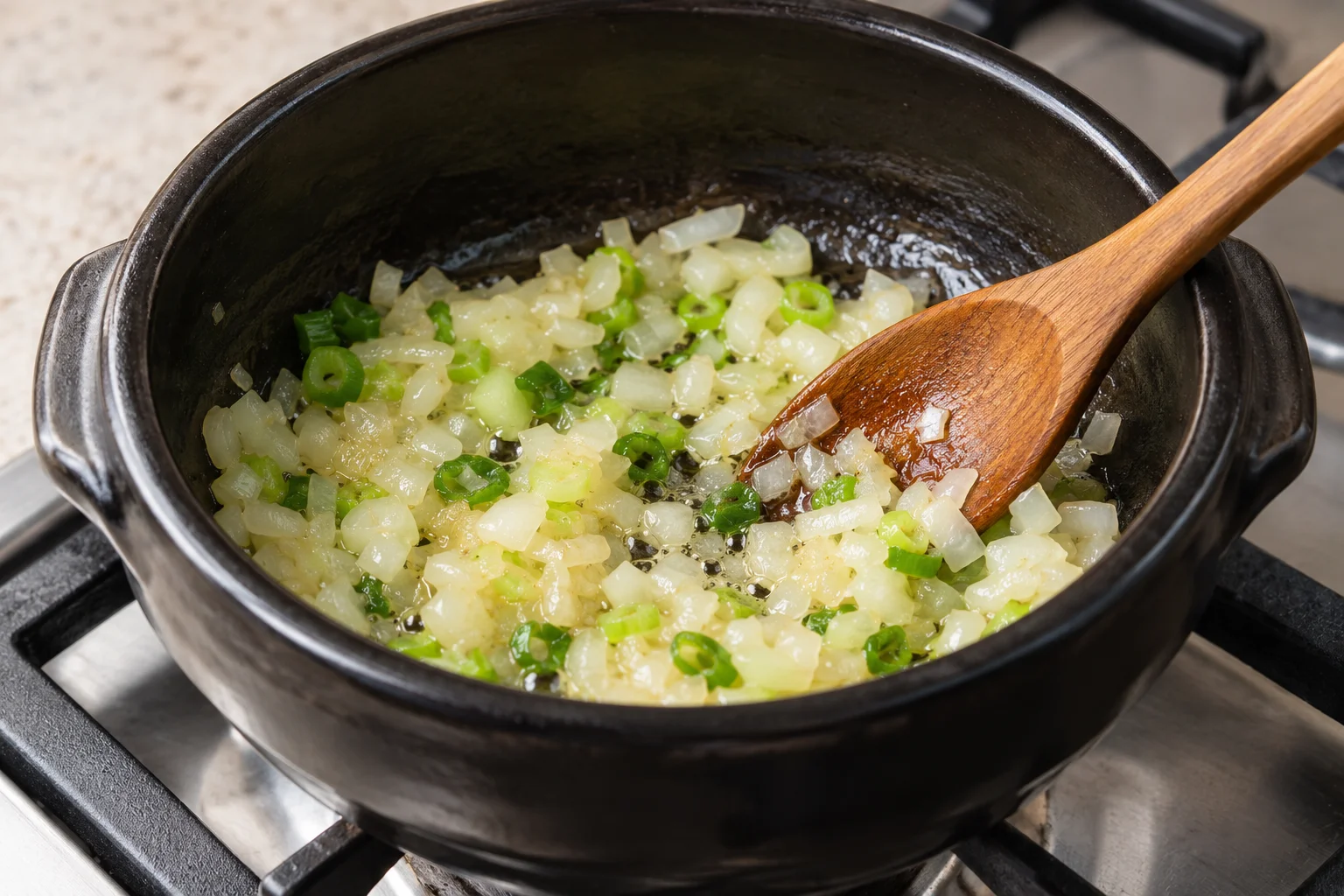
Warm sesame and neutral oil over medium-low heat in a small heavy pot. Add onion and white scallion; stir until softened. Avoid browning the aromatics.
3. Bloom the chili gently
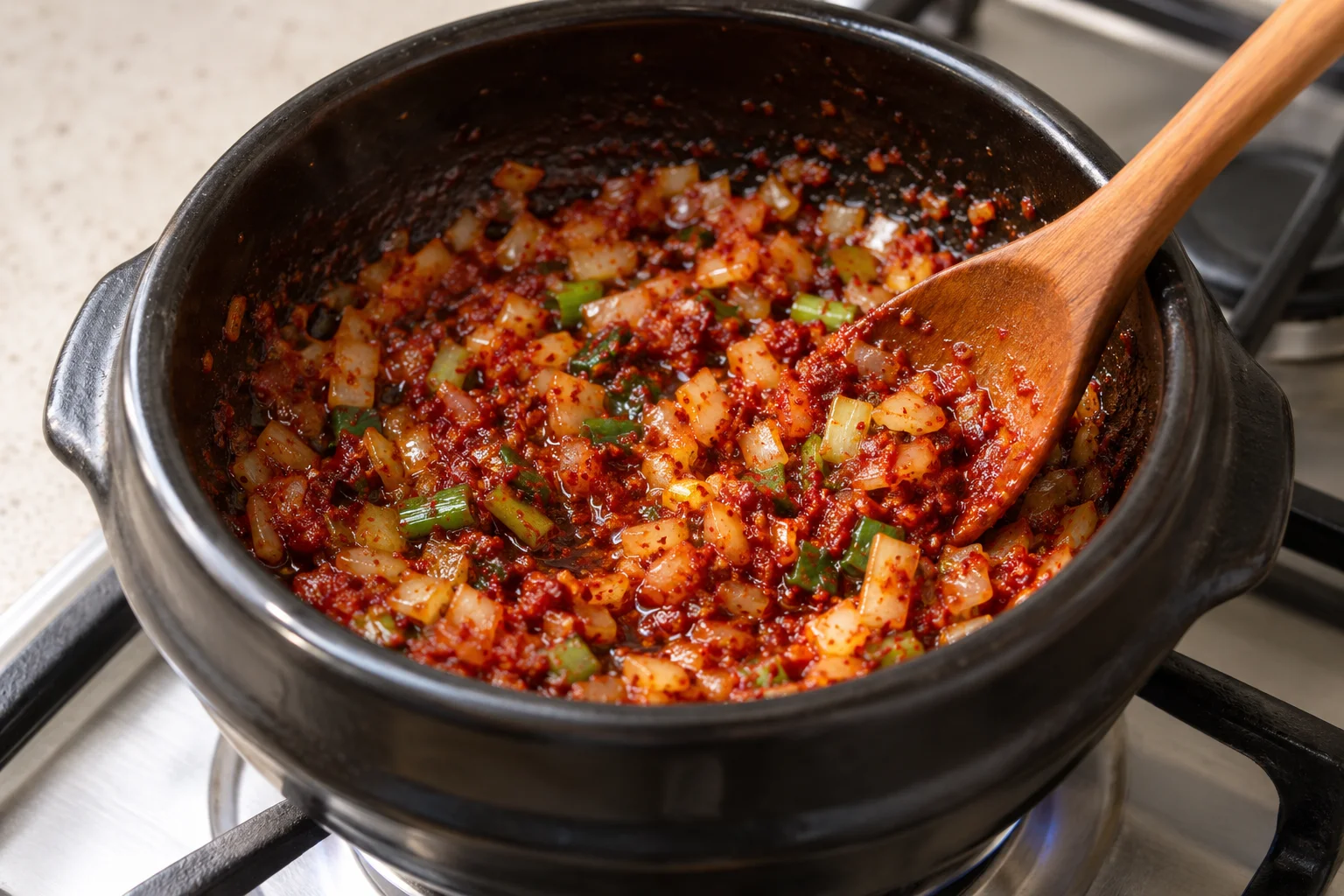
Turn the heat low. Stir in gochugaru until the oil turns red and smells fragrant; add soy sauce and oyster sauce. Keep the mixture moist and remove from heat if the chili darkens.
4. Add the broth
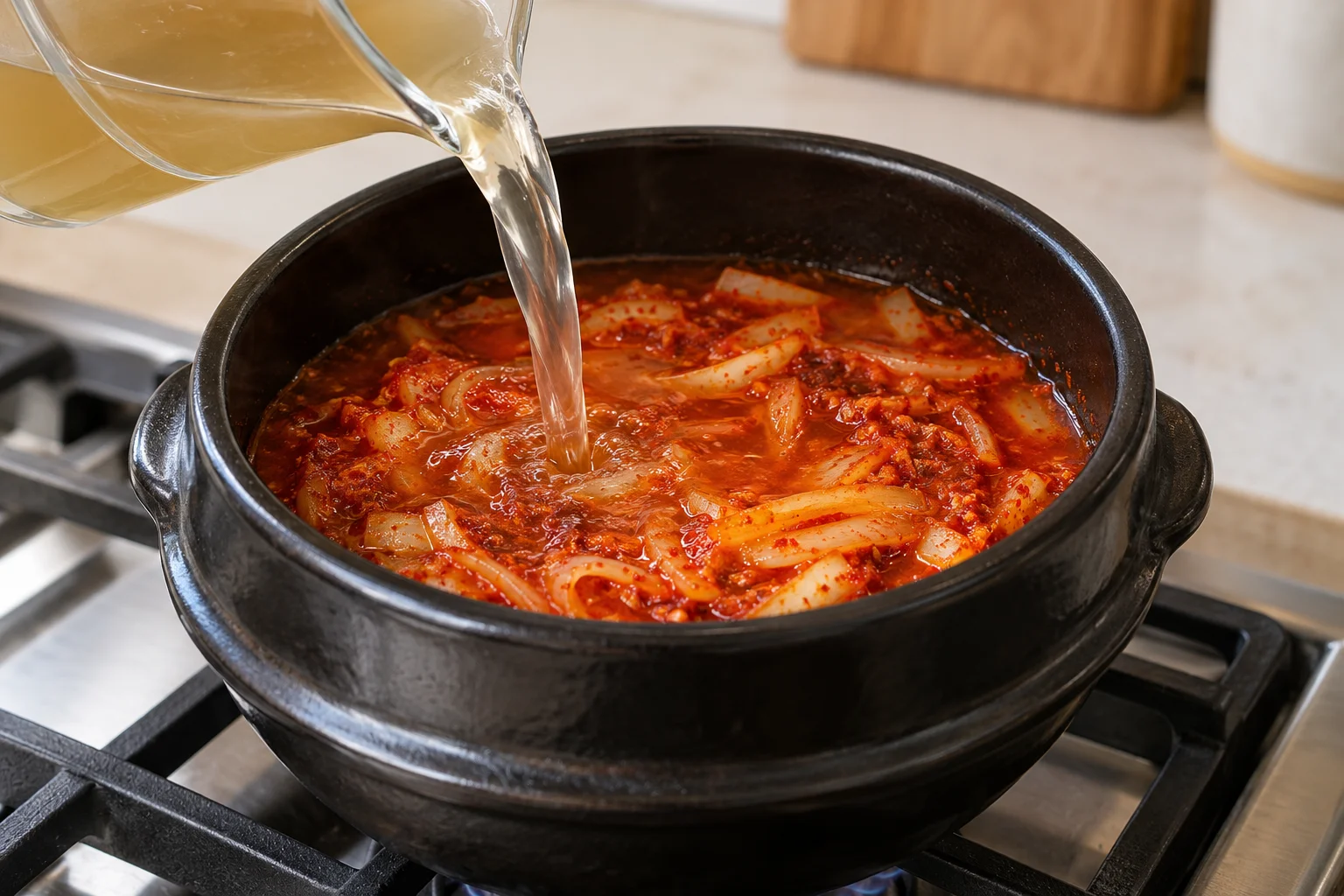
Carefully pour in the stock and stir to loosen the aromatic mixture. Leave room for the tofu and egg; use a pot with at least 1.2 L capacity. Bring to a simmer.
5. Warm the vegetables and tofu
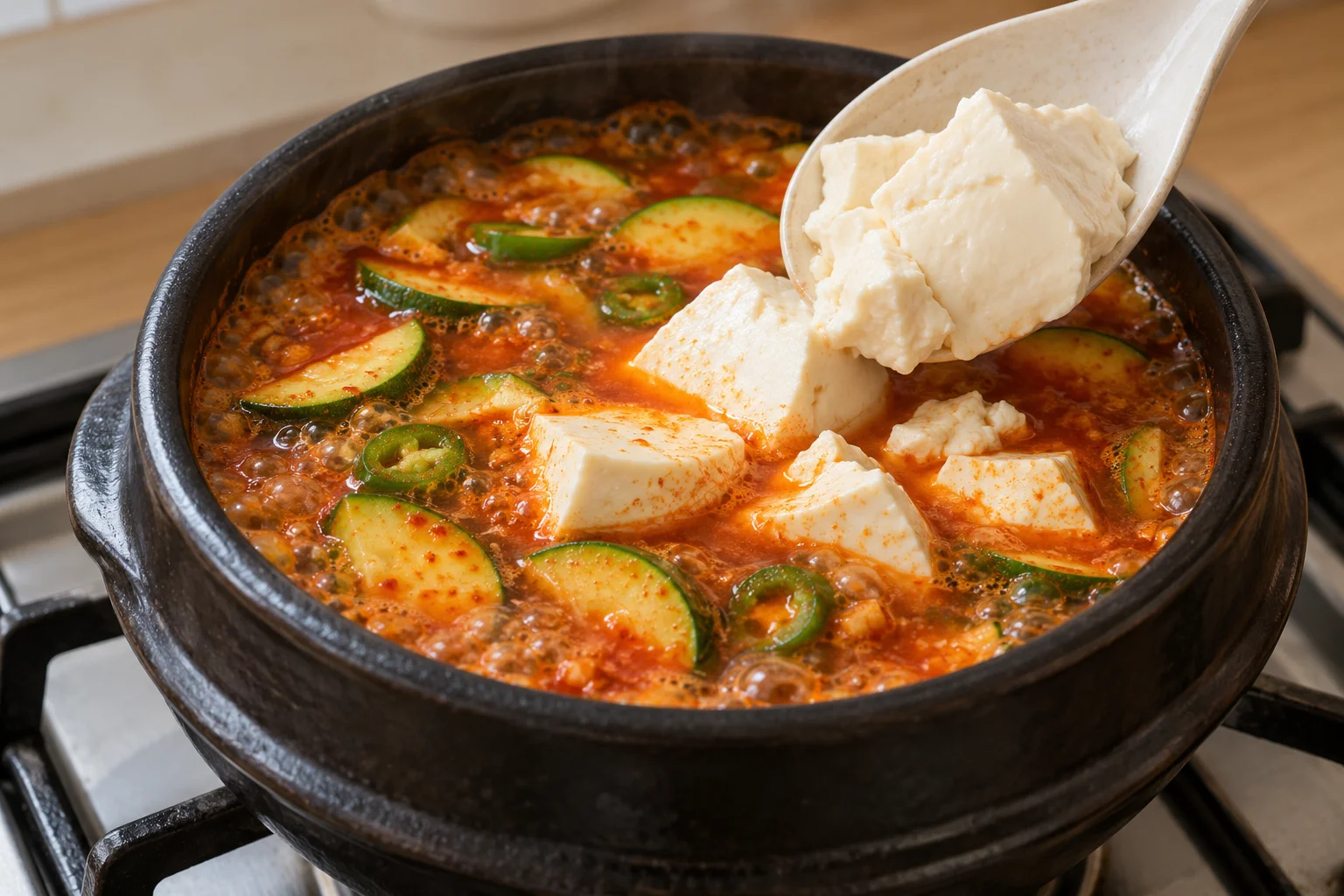
Add zucchini, chili and garlic. Simmer until zucchini is tender, then spoon in soft tofu in large pieces. Heat gently without vigorous stirring so the curds stay intact.
6. Cook the egg and finish
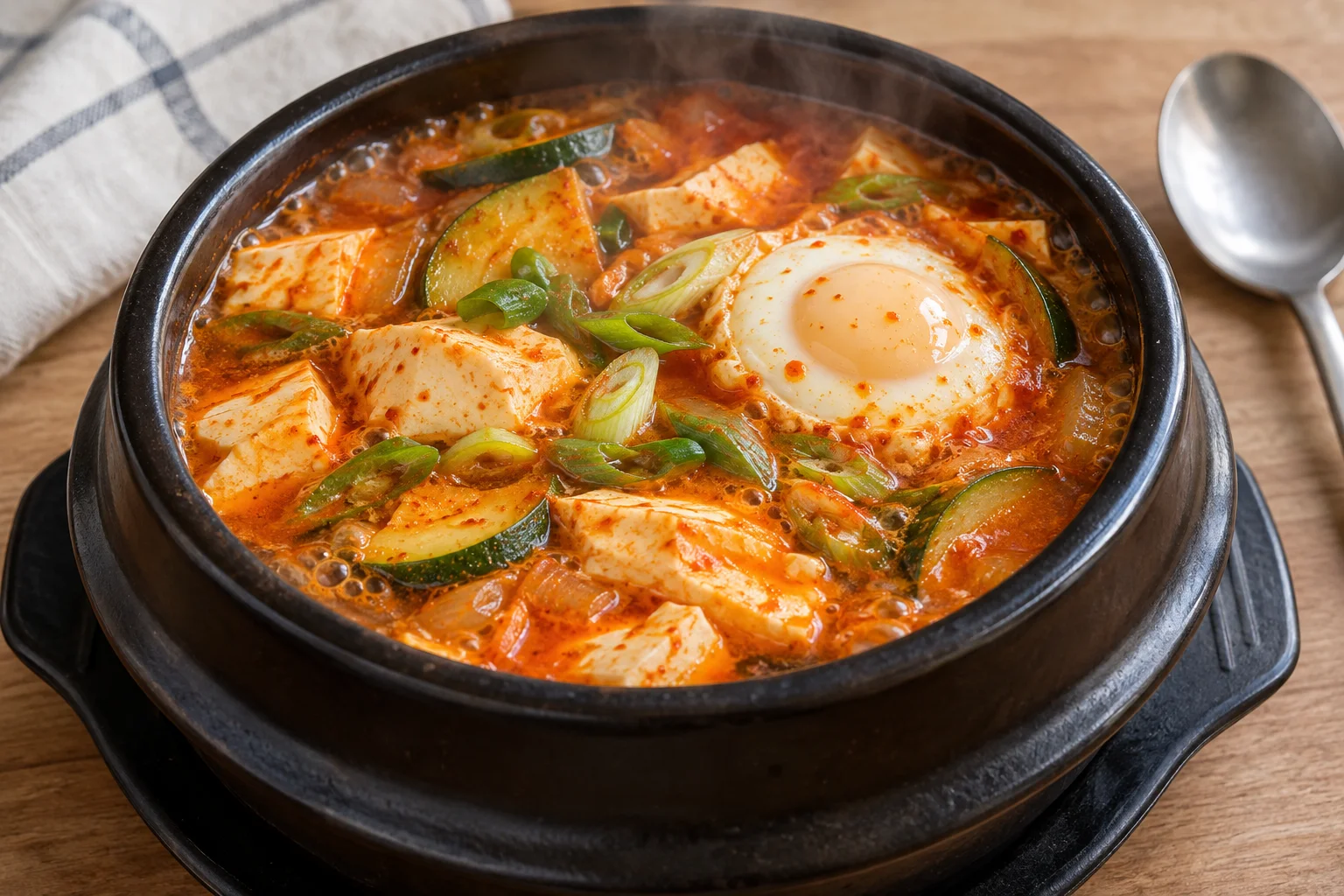
Add the egg and reserved green scallion. Simmer until the egg white and yolk are firm, and the egg mixture reaches 160°F (71°C). Taste, then add a little salt only if needed; optional sugar can soften sharpness. Serve hot with rice.
Recipe card
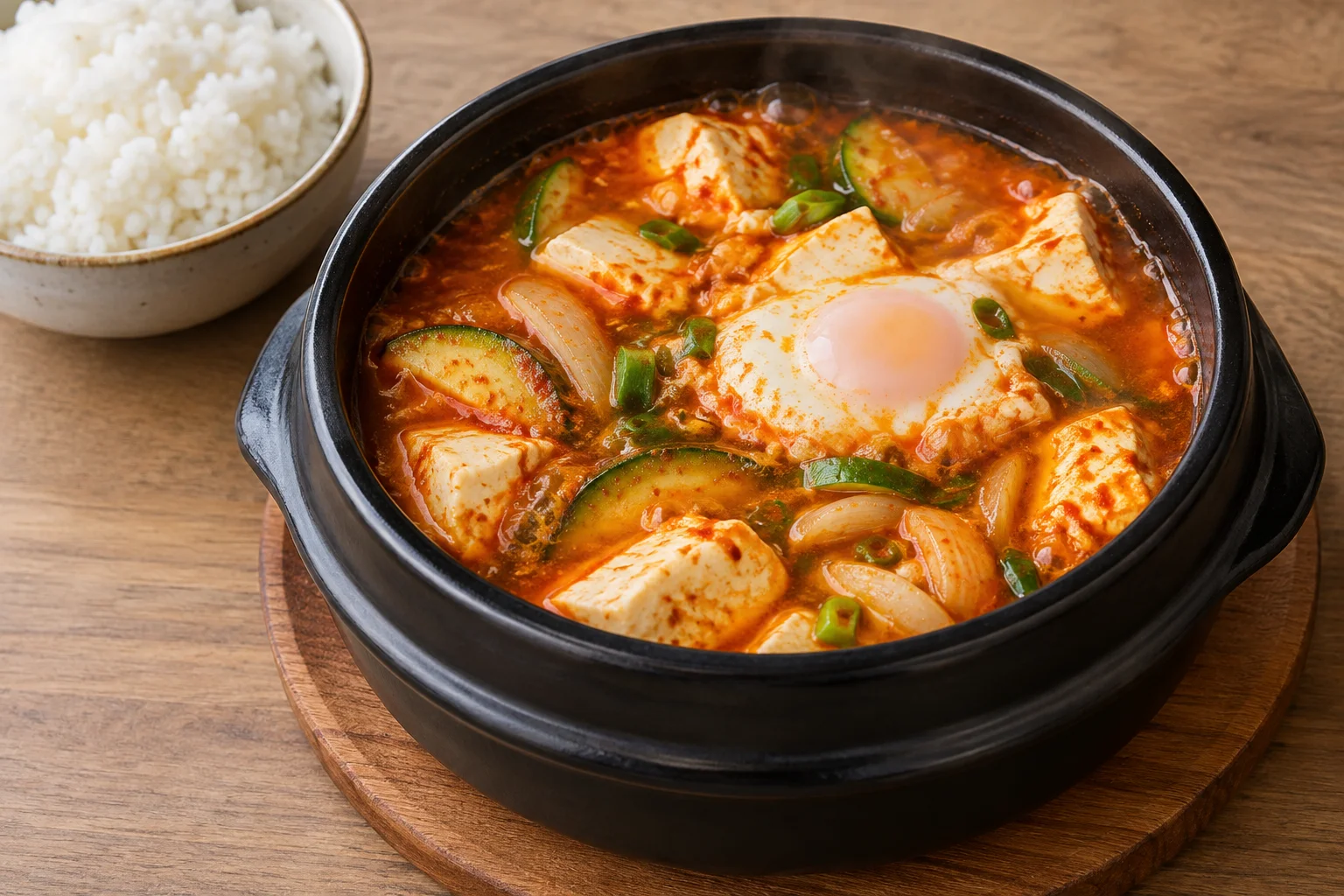
Sundubu Jjigae (Korean Soft Tofu Stew)
Ingredients
Equipment
Method
- Prepare 350 g soft tofu and 350 ml unsalted anchovy stock; these are editorial starting quantities because the reference omits them. Finely dice the onion and white scallion. Slice the zucchini into thin half-moons and the chili into rings. Reserve green scallion for the finish.
- Warm sesame and neutral oil over medium-low heat in a small heavy pot. Add onion and white scallion; stir until softened. Avoid browning the aromatics.
- Turn the heat low. Stir in gochugaru until the oil turns red and smells fragrant; add soy sauce and oyster sauce. Keep the mixture moist and remove from heat if the chili darkens.
- Carefully pour in the stock and stir to loosen the aromatic mixture. Leave room for the tofu and egg; use a pot with at least 1.2 L capacity. Bring to a simmer.
- Add zucchini, chili and garlic. Simmer until zucchini is tender, then spoon in soft tofu in large pieces. Heat gently without vigorous stirring so the curds stay intact.
- Add the egg and reserved green scallion. Simmer until the egg white and yolk are firm, and the egg mixture reaches 160°F (71°C). Taste, then add a little salt only if needed; optional sugar can soften sharpness. Serve hot with rice.
Notes
Small adjustments that help
If the chili mixture looks dry, lower the heat immediately and move to the broth step. Burnt chili can taste bitter; adding more spice will not remove that flavor. If the stew tastes too salty, add a little unsalted stock and taste again. Do this gradually to avoid turning a concentrated stew into a thin soup. If it is too spicy, serve smaller spoonfuls alongside extra rice.
Soft tofu breaks easily. Lower it with a spoon and move the pot gently rather than repeatedly stirring. The photographs illustrate the process and may show slight differences in vegetable cuts; use the written instructions for preparation and a thermometer for egg doneness.
Storage and reheating
Cook the egg until its white and yolk are firm; egg dishes should reach 160°F (71°C). Refrigerate leftovers in shallow containers within two hours, or one hour when the temperature is above 90°F (32°C). Keep at 40°F (4°C) or colder and use within three to four days. Reheat leftovers to 165°F (74°C), gently stirring to distribute heat; tofu may break further on reheating.
Research references
Ingredient and method research: 케이쿡 on 10000recipe. Independent English guidance and editorial quantities are provided by My Babsang. This recipe has not been kitchen-tested by My Babsang. The finished and step photographs were generated to illustrate the cooking process; source photographs were not reused.
Food safety: USDA — Shell Eggs from Farm to Table and USDA — Leftovers and Food Safety.
Questions, corrections & cooking results
Tell us which ingredient, step or page needs attention. For a cooking result, include the equipment and changes you made. Messages are reviewed privately; they are not published as ratings.
Leave a Reply